
- Company overview The heart of SMC Vision & Philsophy Partnership Certifications Company culture
- Our service Design and Engineering Maintenance and Service Examine Production Line Upgrade and Transformation Storage and Logistics Processing, Trading and Distributor
- Management Our history Global responsibility Info Center
- Procurement center Internship
- Metal Steel Products Stainless Steel Products Aluminum Products Copper Products Galvanized Steel and PPGI Special Alloy Building Material
- Containers ISO Standard Container Equipment Container Storage Container Tank Container Container Fittings Container Trailer Refrigerated/Reefer Container Offshore Container Container House
- Gas Cylinder & Fire Extinguisher Cryogenic Liquid Cylinder Oxygen Gas Cylinder Storage Tank CNG Gas Cylinder LPG Gas Cylinder Hydrogen Gas Cylinder Nitrogen Gas Cylinder Industry Gas Cylinder Fire Extinguisher
- Metal Machinery Motor Forming Machine Cutting Machine Processing Machine Bending Machine Block Machine Spare Parts Other Machinery
- Mechanical Products Conveyor Belt Miscellany Mooring Equipment Laser Equipment Bearing Marine Equipment Vehicle Industry Pressure Vessel
- Electrical System Transformer Production Line Lighting System Power Distribution Automation Electrical Cable Solar Power System Electric Protection System
- Project Plastic Pipes and Pipe Fittings Fiberglass Reinforced Plastic Pontoon System
Cold Rolled Steel Plate



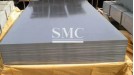

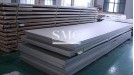
Thickness Range: 0.15mm - 3.0mm
Width Range: 600mm - 1550mm
Surface Treatment: Oiled, Un-oiled, or Phosphated
Edge Condition: Mill Edge or Slit Edge
Shanghai Metal Corporation is a leading Cold Rolled Steel Plate manufacturer and supplier.
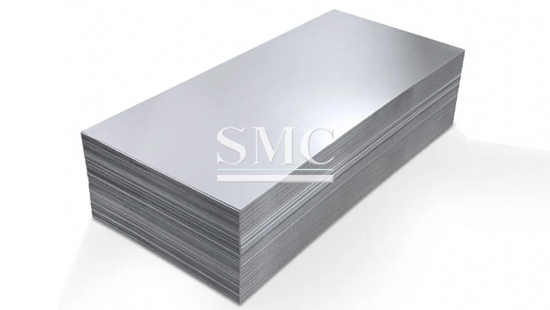
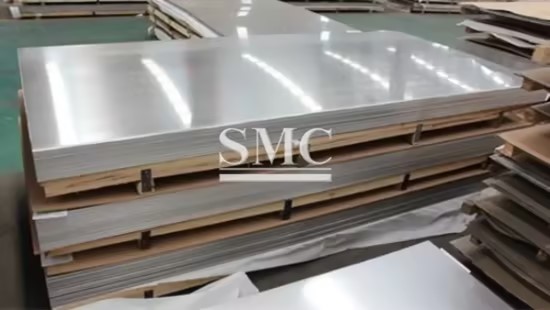
Cold Rolled Steel Plate is a flat-rolled steel product produced by further processing hot-rolled pickled coils at room temperature. This cold reduction process results in a product with superior dimensional accuracy, a smoother surface finish, and enhanced mechanical properties compared to hot-rolled steel. It is the foundational material for applications requiring precise forming, welding, or painting, such as automotive body panels, home appliance housings, and steel furniture. The primary value it offers is providing a high-quality, consistent substrate that ensures better performance in subsequent manufacturing processes and a superior final appearance.
If you want to know more about our Steel products or Cold Rolled Steel Plate price please feel free to contact us, we will reply you within 24 hours.
-

1.Material Grades: Commercial, drawing, and deep-drawing grades available. Grade choice depends on required formability.
2. Surface Finish: Matte (paint-ready), Bright , and Dull (texturing-suitable) finishes offered.
3. Dimensional Tolerance: Tight tolerances ensure consistency and reduce waste during stamping and blanking.
4. Mechanical Properties: Cold rolling increases strength; annealing adjusts temper for desired strength-ductility balance
5. Flatness: Better flatness than hot-rolled products, ideal for laser cutting and precision stamping.
6. Formability: Excellent deep-drawing and bending, for complex shapes without cracking.
-

-
-

1. Superior Surface Quality
Cold rolling produces a smooth, scale-free surface, reducing pre-painting preparation and saving manufacturing time and cost.
2. Excellent Dimensional Accuracy
Precise thickness and width tolerances ensure parts fit correctly on automated lines and reduce scrap from out-of-spec materials.
3. Enhanced Strength and Hardness
Work hardening from cold reduction increases strength over hot-rolled steel, enabling lighter, stronger components—especially valuable in automotive.
4. Good Formability
Annealed grades offer excellent ductility for deep-drawing complex shapes like automotive parts and appliance shells in one pressing.
-

1. Automotive Body Panels
Used for doors, hoods, and trunk lids. Good formability for complex shapes plus smooth surface for quality paint finish. Grades DC04/DC06 recommended.
2. Home Appliance Housings
Primary material for refrigerator, washing machine, and oven shells. Excellent surface finish for powder coating; formability enables seamless designs.
-
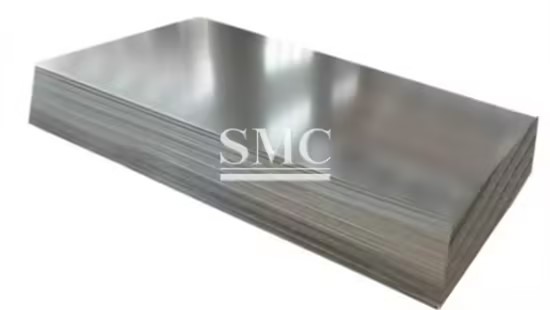
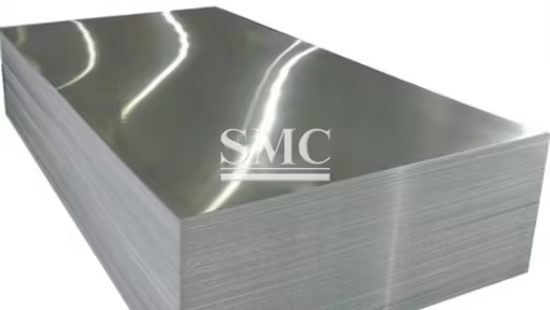

Cold rolling uses hot-rolled steel coil as raw material, and is subjected to pickling to remove scale and then cold-rolling. The finished product is rolled hard roll. The cold work hardening caused by continuous cold deformation increases the strength and hardness of the rolled hard roll and is toughened. Rolled hard rolls can be used as raw materials for hot-dip galvanizing plants.
Cold rolled steel is thinner, smoother and stronger than hot-rolled products. Cold rolled steel is distinctive due to its aesthetic appearance,having well-defined corners, more uniformity, and a smooth surface. Since the process is performed at room temperature, the steel will not shrink as it cools, as it does in the hot-rolled process.
|
GRADE |
STANDARD |
DIMENSION, MM
|
APPALICATIONS |
||
|
Thickness
|
Width |
Length |
|||
|
DC01, DC03, DC04, DC05, DC06, DC07, SPCCT-SD, SPCD-SD, SPCE-SD, SPCF-SD, SPCG-SD |
Q/WG(LZ)20-2008 EN 10130:1998 JIS G 3141:2005 |
0.2 ~ 3.0 |
600- 2050 |
Customized |
General and deep drawing forming components and parts |
|
GRADE |
YIELD STRENGTH Mpa |
TENSILE STRENGTH Mpa |
ELONGATION % |
PLASTICITY INDEX |
HARDEN INDEX |
|
DC01 |
140~280 |
270~410 |
≥28 |
- |
- |
|
DC03 |
140~240 |
270~370 |
≥34 |
≥1.4 |
- |
|
DC04 |
120~210 |
270~350 |
≥38 |
≥1.8 |
≥0.18 |
|
DC05 |
120~180 |
270~330 |
≥40 |
≥2.0 |
≥0.20 |
|
DC06 |
120~170 |
270~330 |
≥42 |
≥2.1 |
≥0.22 |
|
DC07 |
100~150 |
250~310 |
≥44 |
≥2.5 |
≥0.23 |
Packaging of Cold Rolled Steel Plate:
Standard Packaging
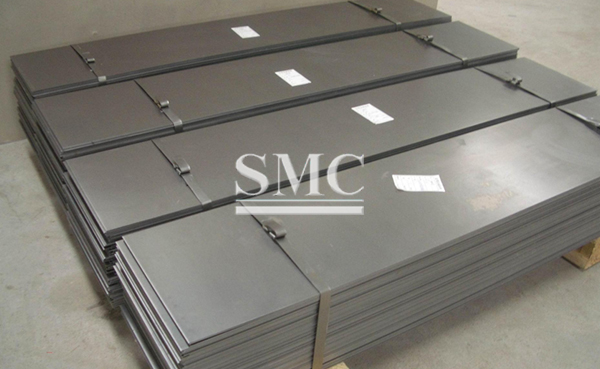
For sheet products, steel plates are stacked neatly, wrapped in waterproof paper, and secured with steel straps. The entire stack is then placed on a fumigated wooden pallet and covered with a plastic or metal hood for protection against moisture and damage during transit. For coil products, each coil is wrapped with protective PE film and secured with end caps. Coils are then packed in reinforced export cartons or on wooden pallets for international shipment.
Shipping
We support FCL and LCL sea freight, air freight, and express delivery depending on order quantity and destination. Trade terms include EXW, FOB, CIF, and others may be available upon request. Shipping costs are calculated based on cargo volume, gross weight, destination, and the selected transportation method.
Lead Time
Samples: 3-7 working days
Standard orders: 15-25 working days
Customized orders: 25-40 working days


Q: What is the difference between Cold Rolled and Hot Rolled steel?
A: The main difference is the processing temperature. Hot rolling is done above the steel's recrystallization temperature, resulting in scaled surfaces and less precise dimensions. Cold rolling is done at room temperature, which produces a smoother surface, tighter dimensional tolerances, and increased strength, making it better for precise applications.
Q: What information do you need to provide a quotation?
A: To give an accurate quote, please provide the material grade (e.g., DC01, SAE 1010), dimensions (thickness, width, length), surface finish (e.g., matte, bright), temper (e.g., annealed, full hard), and the total quantity required.
Q: Can you provide custom cut-to-length sheets?
A: Yes, we offer cut-to-length services. You can specify the exact length and width you need, and we will process the coils accordingly to reduce your production waste and handling costs.
Q: What is the typical surface treatment for painting?
A: For painting applications, a chemically treated or phosphated surface is often recommended as it provides excellent paint adhesion and corrosion resistance. A standard oiled, matte finish is also suitable for many general painting purposes after proper cleaning.
Q: What factors should I consider when choosing a grade?
A: The primary factor is the complexity of the forming process. For simple bending, a commercial quality like DC01 is sufficient. For deep drawing or complex shapes (like automotive panels or sinks), a drawing quality grade like DC03 or DC04 with higher ductility is necessary to prevent cracking.
here
for
price