
- Company overview The heart of SMC Vision & Philsophy Partnership Certifications Company culture
- Our service Design and Engineering Maintenance and Service Examine Production Line Upgrade and Transformation Storage and Logistics Processing, Trading and Distributor
- Management Our history Global responsibility Info Center
- Procurement center Internship
- Metal Steel Products Stainless Steel Products Aluminum Products Copper Products Galvanized Steel and PPGI Special Alloy Building Material
- Containers ISO Standard Container Equipment Container Storage Container Tank Container Container Fittings Container Trailer Refrigerated/Reefer Container Offshore Container Container House
- Gas Cylinder & Fire Extinguisher Cryogenic Liquid Cylinder Oxygen Gas Cylinder Storage Tank CNG Gas Cylinder LPG Gas Cylinder Hydrogen Gas Cylinder Nitrogen Gas Cylinder Industry Gas Cylinder Fire Extinguisher
- Metal Machinery Motor Forming Machine Cutting Machine Processing Machine Bending Machine Block Machine Spare Parts Other Machinery
- Mechanical Products Conveyor Belt Miscellany Mooring Equipment Laser Equipment Bearing Marine Equipment Vehicle Industry Pressure Vessel
- Electrical System Transformer Production Line Lighting System Power Distribution Automation Electrical Cable Solar Power System Electric Protection System
- Project Plastic Pipes and Pipe Fittings Fiberglass Reinforced Plastic Pontoon System
Impeller
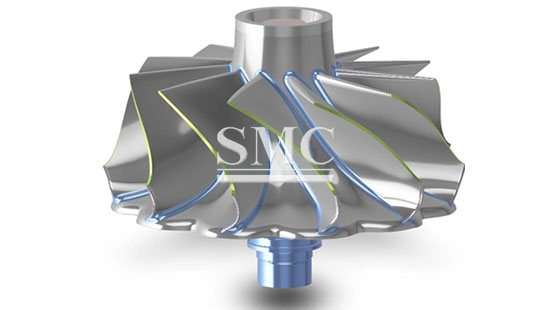
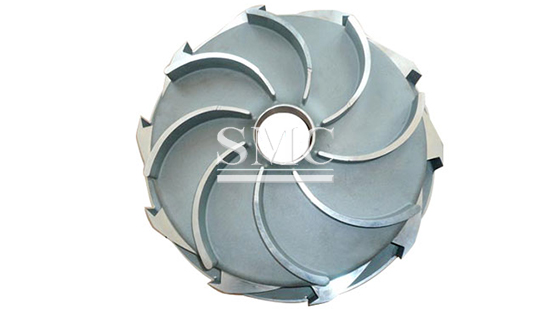
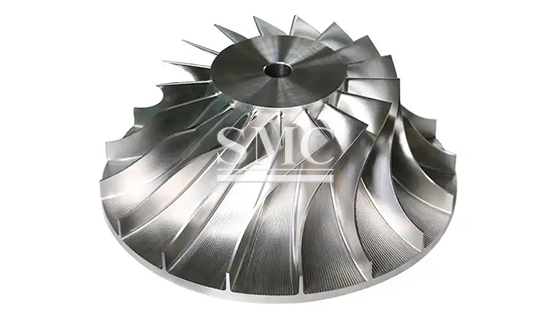
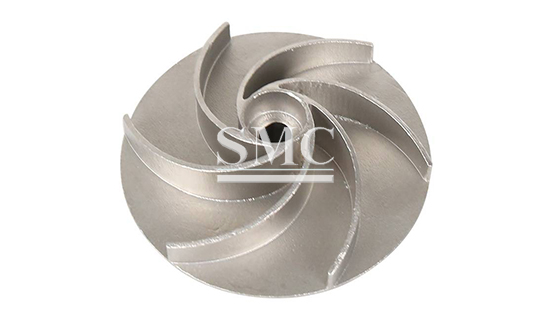
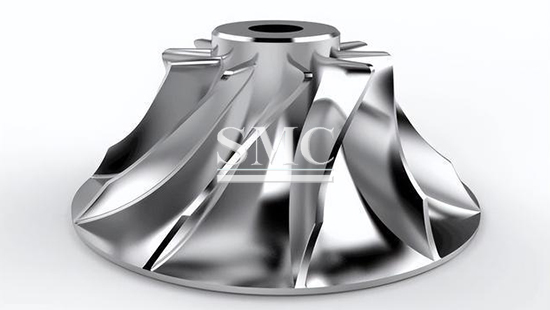
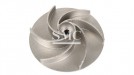
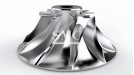
Type: Centrifugal, Axial Flow, Mixed Flow
Diameter: 50 - 2000mm
Material: Carbon Steel, Stainless Steel, FRP
Shanghai Metal Corporation is a leading impeller manufacturer and supplier.
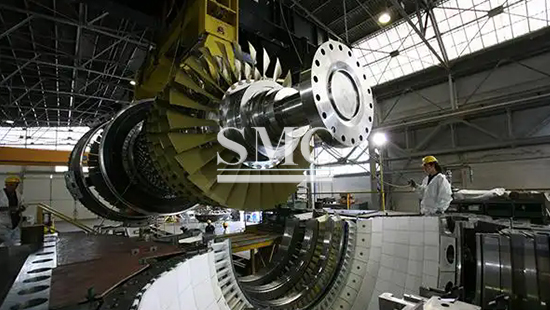
The impeller is the core rotating component of fluid machinery such as pumps, fans, and compressors. Its design directly determines the equipment's efficiency and performance. Its core feature is performing work on the fluid through high-speed rotating blades, thereby increasing fluid pressure or velocity. An impeller typically consists of a hub, blades, and a shroud (if applicable). Based on fluid flow direction, they are mainly categorized as centrifugal, axial flow, or mixed flow. The blade shape, quantity, and installation angle are precisely designed to optimize energy conversion efficiency.
Its key advantages stem from its precise design and manufacturing: high-efficiency fluid conveying capability, exceptional structural strength to withstand centrifugal force generated by high-speed rotation, good resistance to cavitation and wear, and stable operation achieved through dynamic balancing. Made from materials like stainless steel, alloy steel, bronze, or composites, they can meet the requirements of different media (e.g., clean water, wastewater, corrosive liquids, gases) and operating conditions. Their modular design also facilitates selection and replacement based on system requirements.
Impellers are widely used in various fields requiring fluid transportation or pressurization, commonly found in water supply and wastewater treatment, HVAC systems, chemical processes, power plant circulation, marine propulsion, aerospace, and irrigation systems. In demanding industrial environments requiring high reliability, efficiency, and customized design, impellers are critical components.
If you want to know more about our mechanical products or impeller price, please feel free to contact us. We will reply you within 24 hours.




Technical Information of Impeller:
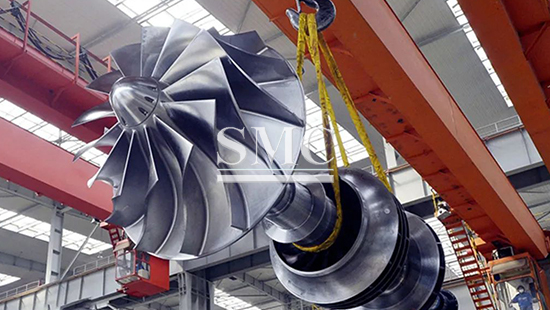
Impellers can be classified into three types based on the curvature of their blades: backward-curved blades (a), radial blades (b), and forward-curved blades (c). The fundamental difference among these three blade types lies in the direction of curvature at the blade outlet. Blades curved in the same direction as the impeller rotation are called forward-curved blades; those curved opposite to the rotation direction are backward-curved blades; and blades with the outlet direction aligned with the impeller diameter are radial blades.
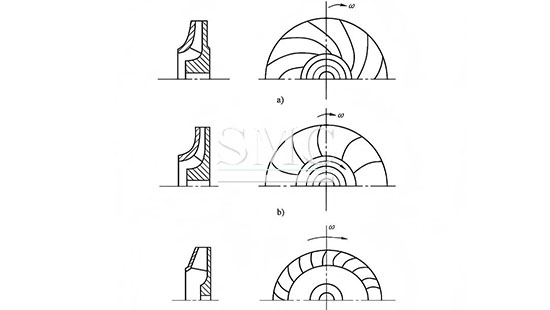
For impellers with these three different blade curvatures, under the same peripheral velocity and airflow relative velocity conditions, backward-curved blade impellers have relatively small outlet absolute velocity and its peripheral component. Forward-curved blade impellers exhibit larger outlet absolute velocity and its peripheral component, while radial blade impellers fall between backward-curved and forward-curved types.
However, in terms of overall compressor stage efficiency, under the same impeller peripheral velocity and blade outlet airflow relative velocity conditions, the outlet absolute velocity of forward-curved blades is significantly higher than that of backward-curved blades. For compressor stages with forward-curved blades, pressure rise largely relies on the high impeller outlet velocity being decelerated and diffused in stationary components. Yet, during the diffusion process in stationary components, flow losses are substantial, especially at high impeller peripheral velocities where high Mach numbers can lead to significant flow losses, reducing overall stage efficiency.
For backward-curved blades, due to the low airflow velocity at the impeller outlet, stage pressure rise is primarily achieved through centrifugal force within the rotating impeller and flow diffusion inside the impeller. Experimental data indicate relatively low flow losses during the pressurization process within the impeller. Therefore, for compressor stages with backward-curved blades, stage pressure rise mainly occurs in the impeller with minimal flow losses. The airflow outlet velocity is much lower than that of forward-curved blades, significantly reducing flow losses in stationary components. Thus, from an efficiency perspective, backward-curved blade impellers are more likely to achieve higher stage efficiency.
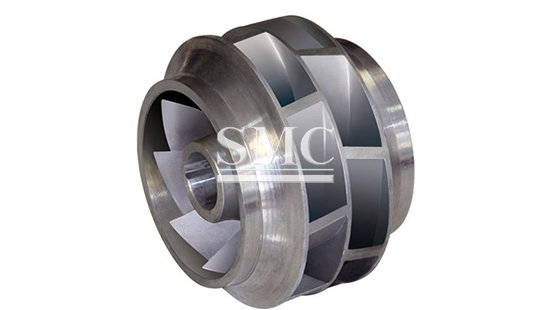
For impellers, increasing peripheral velocity is an effective way to achieve the highest possible stage pressure ratio. However, due to strength constraints of the shroud, peripheral velocity is limited, with closed impellers generally operating below 320 m/s. To maximize stage pressure ratio, impellers without a shroud, known as semi-open impellers (a), can be used. This design is advantageous from a strength perspective, allowing peripheral velocities of 450–500 m/s. However, in terms of stage efficiency, direct friction between airflow in the impeller passage and stationary walls, as well as leakage through gaps between blades and stationary walls, results in lower efficiency compared to closed impellers.
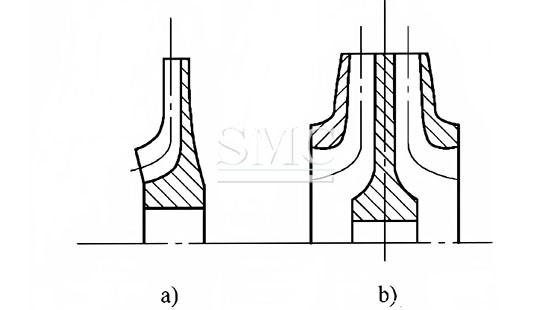
To accommodate large-flow compressor stages, impellers can also be designed with a double-entry configuration (b). This design not only suits high-flow stages but also offers the advantage of self-balancing axial forces. However, it presents drawbacks in terms of manufacturing complexity and structural intricacy.To accommodate large-flow compressor stages, impellers can also be designed with a double-entry configuration (b). This design not only suits high-flow stages but also offers the advantage of self-balancing axial forces. However, it presents drawbacks in terms of manufacturing complexity and structural intricacy.
Packaging of Impeller:
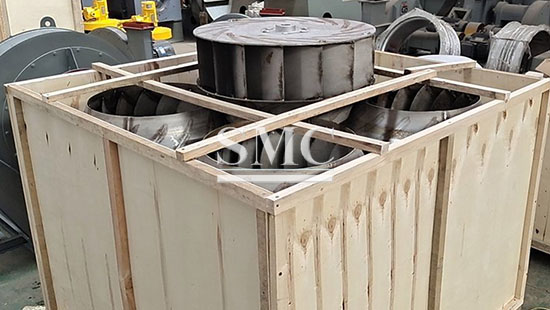
Shanghai Metal Products are packed and labeled according to the regulations and customer's requests. Great care is taken to avoid any damage which might be caused during storage or transportation. In addition, clear labels are tagged on the outside of the packages for easy identification of the product I. D. and quality information.
1) Shanghai Metal Standard
2) Customization

here
for
price