
- Company overview The heart of SMC Vision & Philsophy Partnership Certifications Company culture
- Our service Design and Engineering Maintenance and Service Examine Production Line Upgrade and Transformation Storage and Logistics Processing, Trading and Distributor
- Management Our history Global responsibility Info Center
- Procurement center Internship
- Metal Steel Products Stainless Steel Products Aluminum Products Copper Products Galvanized Steel and PPGI Special Alloy Building Material
- Containers ISO Standard Container Equipment Container Storage Container Tank Container Container Fittings Container Trailer Refrigerated/Reefer Container Offshore Container Container House
- Gas Cylinder & Fire Extinguisher Cryogenic Liquid Cylinder Oxygen Gas Cylinder Storage Tank CNG Gas Cylinder LPG Gas Cylinder Hydrogen Gas Cylinder Nitrogen Gas Cylinder Industry Gas Cylinder Fire Extinguisher
- Metal Machinery Motor Forming Machine Cutting Machine Processing Machine Bending Machine Block Machine Spare Parts Other Machinery
- Mechanical Products Conveyor Belt Miscellany Mooring Equipment Laser Equipment Bearing Marine Equipment Vehicle Industry Pressure Vessel
- Electrical System Transformer Production Line Lighting System Power Distribution Automation Electrical Cable Solar Power System Electric Protection System
- Project Plastic Pipes and Pipe Fittings Fiberglass Reinforced Plastic Pontoon System
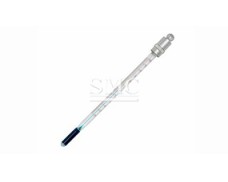
Wear-resistant Thermocouple
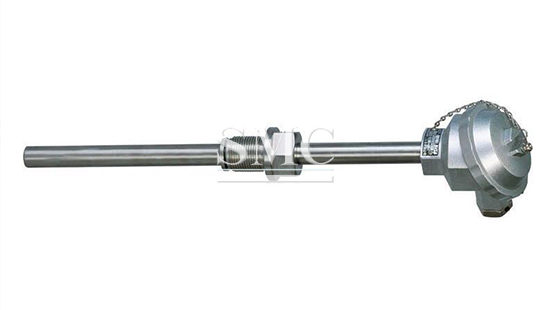
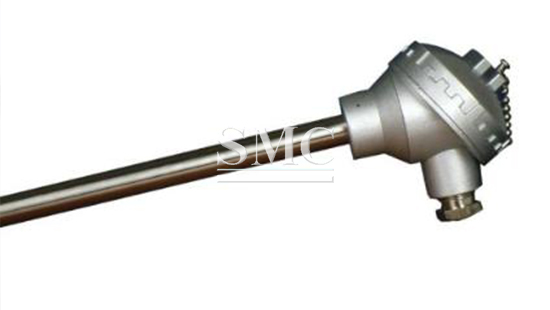
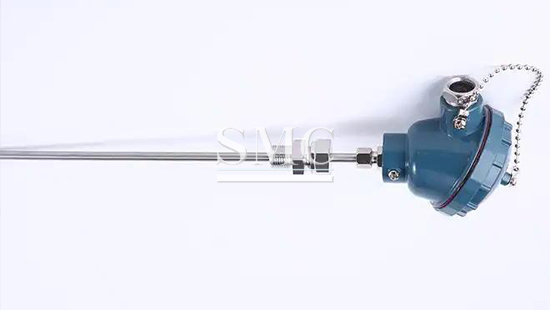

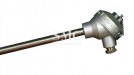
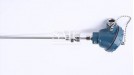
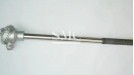
Measuring temperature range: 0 ~ 1200℃
Thermocouple grade: K,R,S type
Protective sleeve material: WC cemented carbide alloy
Probe diameter: Φ16 / Φ20 / Φ25 mm
Cable length: customizable
Shanghai Metal Corporation is a leading Wear-resistant Thermocouple manufacturer and supplier.
This wear-resistant thermocouple is a temperature measuring sensor used to convert thermal energy into voltage signals for temperature monitoring. It is composed of thermocouple wires, wear-resistant alloy protective sleeve, junction box and connecting fittings. This product is mainly used for temperature measurement in power plant boilers, cement rotary kilns, mine material pipelines and circulating fluidized bed systems. It solves the common problems of ordinary thermocouples in harsh industrial environments: rapid abrasion of the outer tube caused by high-speed flowing solid particles, short service life, frequent replacement and high maintenance cost. The thick hard alloy protective shell can resist continuous scouring from dust and granular materials, reducing sensor damage frequency and lowering the downtime caused by sensor replacement.
If you want to know more about our Temperature Sensor products or Wear-resistant Thermocouple price please feel free to contact us, we will reply you within 24 hours.

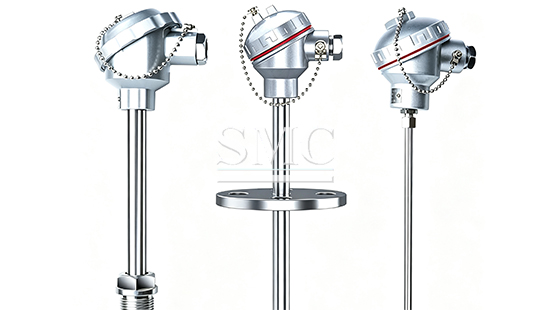
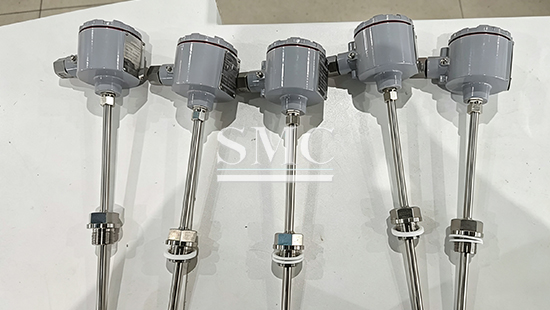

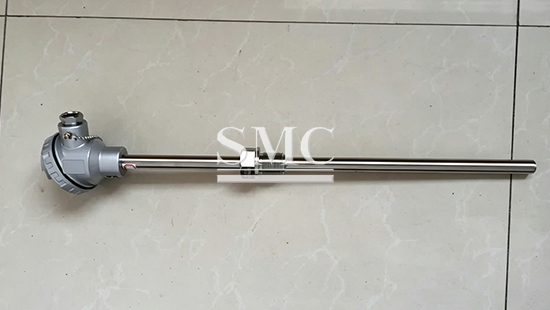
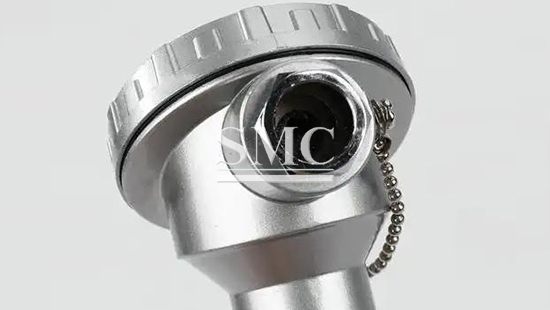



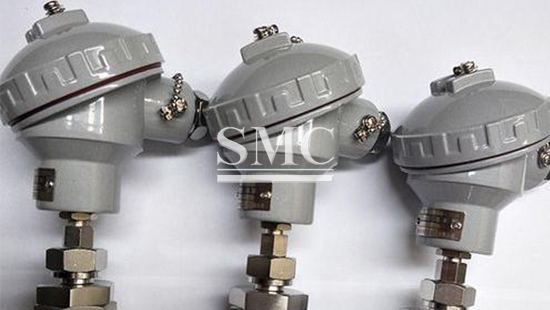
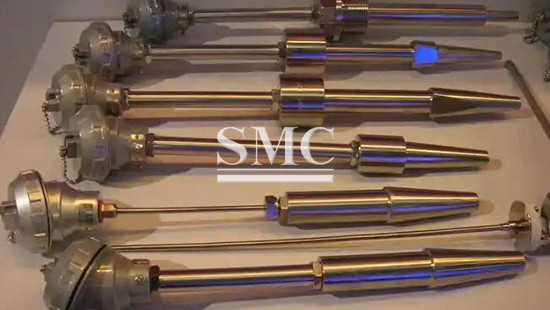
Technical Information of Wear-resistant Thermocouple:
|
Model |
WRNSH-134NG,WRNSH-234NG,WRNSH-334NG |
|
Connection |
No fixed,Fixed thread type,Fixed flange |
|
size |
φ18~32mm,long 600~2000mm |
|
Wear-resistant length |
200~300mm/310~400mm/410~500mm/510~600mm |
|
Rod Material |
304 stainless steel |
|
work temperature |
-40℃~1600℃ |
|
Wear-resistant head material |
Wear-resistant high temperature alloy |
|
use life |
3~6 months |
Packaging of Wear-resistant Thermocouple:
Standard Packaging:
Alloy Steel Tubes are packed according to tube dimensions, length, surface condition, material grade, and transportation requirements. Tubes may be supplied in secured bundles or protective wooden cases, with suitable separation and external protection to reduce movement and surface damage during handling and transportation. Tube ends may be fitted with protective caps when required by the order.
The final packaging method, bundle quantity, package dimensions, gross weight, and marking details should be confirmed according to the order quantity and customer requirements.
Shipping:
We support FCL and LCL sea freight, air freight, and express delivery where suitable for the order quantity, package dimensions, and destination. EXW, FOB, CIF, and other applicable trade terms may be available upon request.
Lead Time
Sample orders: To be confirmed according to material availability and required testing.
Standard orders: To be confirmed according to material grade, dimensions, quantity, and production schedule.
Customized orders: To be confirmed after reviewing drawings, technical specifications, testing requirements, and quantity.
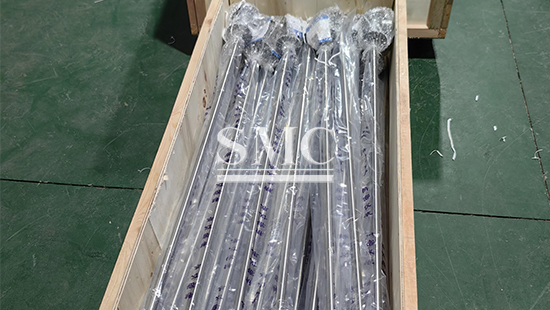


1. What information is required for an Alloy Steel Tube quotation?
Please provide the material grade or applicable standard, outside diameter, wall thickness, length, quantity, manufacturing process, heat treatment, testing requirements, and delivery destination.
2. What is the available size range?
The current product page lists an outside diameter of 19.05–101.6 mm, a wall thickness of 2–12 mm, and customized lengths. Availability depends on the selected grade and production process.
3. What is the difference between ASTM A213 and ASTM A335?
ASTM A213 is intended for seamless boiler, superheater, and heat-exchanger tubes. ASTM A335 covers seamless ferritic alloy-steel pipe for high-temperature service. The correct standard depends on the product type and application.
4. Can the tube length be customized?
Yes. Tube length can be customized according to the customer's requirements, transportation conditions, cutting tolerance, and production capabilities.
5. Can you supply P11, P22, or P91 alloy steel grades?
These grades are commonly specified for high-temperature alloy steel piping and related applications. Availability and compliance must be confirmed based on the requested standard, dimensions, heat treatment, and testing requirements.
6. What testing documents are available?
Depending on the agreed specification, documents may include chemical composition results, mechanical test reports, dimensional inspection records, hydrostatic or non-destructive testing reports, and a mill test certificate.
7. How should I select the appropriate Alloy Steel Tube?
The selection should consider operating temperature, working pressure, fluid characteristics, corrosion conditions, tube dimensions, manufacturing process, applicable standard, and required inspection level. Please provide your technical datasheet or drawings for a more accurate recommendation.

here
for
price